Royal Sort™
- 4.6
- Rating
- 1.00M
- Installs
- Free
- Price

 Analysis by App-foxy
I approached Royal Sort™ as a short-session puzzle game rather than something meant to replace a deep strategy title. Its central appeal is easy to understand: arrange matching pieces, clear the board, and keep moving through an adventure built around match-three play. That makes it immediately approachable, but the real question is whether the format gives you enough variety and control to remain enjoyable after the first few sessions.
After spending time with it, I see a game aimed at people who want a light mental break with a clear objective on every screen. It is free to start, rated for Everyone, and comes from Onetap Global. The presentation is friendly enough for casual play, while the puzzle structure gives you a reason to think before making each move instead of tapping randomly. My recommendation depends less on whether you like puzzle games in general and more on what kind of puzzle experience you want.
What to consider before choosing Royal Sort™
The first decision is about session length. This is a good fit when you have a few spare minutes and want something that begins quickly. I can imagine opening it while waiting for an appointment, taking a short break from work, or relaxing before bed. The rules are simple enough that I do not need to relearn them after leaving the game for a day, which is valuable in a mobile puzzle game.
You May Also Like

 Blood Strike: 2.5 Anniversary
Blood Strike’s Loadouts Turn Every Drop Into a Tactical Gamble
A close look at Blood Strike’s custom loadouts: how fast access to signature weapons reshapes its battle royale rhythm, rewards preparation, and narrows the gap between fights.

 Pandora - Music & Podcasts
Pandora’s Music Is Easy to Start, but Harder to Recover
Pandora’s strength is its low-effort path from a seed to a station. Its weak spot is how much confidence it asks you to place in connection, setup, and quiet recovery.

 8 Ball Pool
 Is Built on Rivalries, Rematches, and Routine
A close look at the rivalries, rematches, shared routines, and unanswered safety questions that turn a quick pool match into a persistent mobile community.

 Samsung Music
’s Quiet Strength Is Playing What You Already Own
Its reach comes less from spectacle than from dependable access to a personal library. That simplicity is both the app’s strongest retention engine and its ceiling.

 AccuWeather: Weather Radar
AccuWeather Review: A Quick, Clear Forecast for Everyday Decisions
For everyday plans, the best forecast is the one you can understand quickly. AccuWeather makes rain timing, radar, and local conditions easy to act on, with a few trade-offs.

 Hill Climb Racing
Why Hill Climb Racing Still Turns Crashes Into One More Run
A tiny car, a bumpy hill and one more upgrade: Hill Climb Racing keeps resurfacing because its simple chaos makes every near-miss feel personal.
More From Our News Desk
View All News


The second decision is how much pressure you enjoy. Match-three games can be relaxing when the board gives you room to plan, but they can become frustrating when progress depends on repeated attempts, limited resources, or a difficult arrangement. Royal Sort™ works best when you treat it as a compact challenge rather than a perfectly calm distraction. I found myself switching between quick moves on easy boards and more deliberate scanning when the available matches became less obvious.
The third consideration is your tolerance for free-to-play friction. The game itself costs nothing to download, but optional in-app purchases range from $0.99 to $104.99 per item. That wide range is worth noticing before you begin. A free entry point is convenient, yet anyone who dislikes purchase prompts or the temptation to spend should decide on a personal limit before playing.
It also helps to know what sort of puzzle depth you expect. If you want a traditional match-three board with a strong competitive ranking system, a large social layer, or a highly technical puzzle rule set, this may not be your ideal choice. If you want a colorful, accessible game that combines matching with a sense of forward movement, it is much easier to recommend.
How the basic loop feels in everyday use
The main loop is built around recognizing groups, choosing a useful match, and clearing enough of the board to continue. That sounds familiar because it is, but familiarity is part of the appeal. I do not spend the first session fighting complicated controls. Instead, I can focus on spotting opportunities and deciding whether to take an obvious match now or preserve a better position for later.
My most useful habit was to pause briefly before making the first move. On a small screen, the most visible match is not always the most helpful one. Looking across the whole board first can reveal a chain of possibilities that disappears if I clear the first available group. This is a simple tip, but it changes the game from mindless tapping into a modest planning exercise.
I also found it helpful to separate progress decisions from speed decisions. When I am playing during a short break, I naturally want to move quickly. That works on forgiving stages, but it is less reliable when several matches compete for attention. Taking a few seconds to inspect the edges and lower parts of the board often gives me a better idea of what the next move will expose.
Why the adventure framing matters
Royal Sort™ is not presented as an isolated collection of identical boards. The adventure framing gives each completed puzzle a sense of direction, even when the immediate action remains focused on matching. That small layer of progression matters because it answers the question, “Why play one more level?” A purely endless board can be satisfying, but a journey gives casual players a clearer reason to continue.
For me, the adventure structure is most useful when I am not in the mood for a demanding game. I can make progress without committing to a long story or learning a complicated cast of characters. The puzzle remains the main event, while the surrounding journey provides context. Players looking for a narrative-heavy experience should keep their expectations modest, but players who simply want a little momentum between boards may appreciate the arrangement.
Where it performs better than familiar alternatives
Compared with a basic match-three game that only asks you to beat a score, this one has a stronger sense of purpose. The adventure format makes individual stages feel connected, which helps prevent the experience from becoming a sequence of disconnected exercises. I would choose it over a bare score-chasing alternative when I want progression without the commitment of a full role-playing game.
Compared with a pure sorting puzzle, the match-three foundation feels more immediately readable. Sorting-focused games can be satisfying for players who enjoy organizing objects into exact positions, but they may require more patience and precision. Here, the matching concept gives me a faster visual entry point. I can understand the board almost instantly, then decide whether I want to play casually or think several moves ahead.
It also has an advantage over many offline-style time fillers in one important way: the adventure framing gives my sessions a natural stopping point. I can finish a stage and put the phone down instead of wondering whether I should continue an endless run. That makes it easier to fit into a routine where I only have a short window available.
The game has reached more than 1 million installs and holds a 4.6 average from around 92 thousand ratings, which suggests that the accessible approach is connecting with a broad audience. I do not treat popularity as proof that every player will enjoy it, but it does support my impression that the game is designed to be easy to pick up rather than aimed at a narrow puzzle audience.
Small decisions that improve the experience
One practical approach is to use the early part of a board for information rather than immediate reward. If two matches are equally attractive, I prefer the one that opens a less visible area or creates more room for future moves. This is especially useful when the board is crowded and the best option is not obvious from the center of the screen.
Another useful approach is to avoid playing while distracted when a stage starts to feel tight. I made more careless choices when switching between the game and another task. Because the rules are simple, it is tempting to assume that attention does not matter, but the difference between a good move and a wasted move can be easy to miss.
I would also treat purchases as a convenience rather than a requirement for enjoying the basic loop. If you decide to spend, set a budget before the game creates a reason to do so. The free starting price is one of the strongest reasons to try it, while the presence of optional items means disciplined play is important for anyone managing mobile entertainment spending.
The current version is 1.9.1 and requires Android 8.0 or newer. That makes checking your device compatibility a sensible first step, particularly if you are using an older phone or tablet. On a supported device, the game is positioned as an accessible mobile experience rather than a demanding technical showcase, so I would prioritize screen comfort and battery habits over chasing high-end hardware.
When another type of puzzle game may suit you better
I would not choose Royal Sort™ for a player whose main goal is competitive mastery. A dedicated competitive puzzler is likely to be a better match if leaderboards, timed performance, or direct comparison with other players are the reason you play. This game is more comfortable as a personal progression experience, where completing the next stage matters more than proving that you are faster than someone else.
I would also look elsewhere if you prefer puzzles with one exact logical solution and no dependence on board arrangement. Match-three play naturally includes an element of opportunity: the usefulness of a move depends on what is visible and what it reveals. A logic-grid game, number puzzle, or carefully authored brain teaser may be more satisfying if you want every challenge to test deduction in a precise way.
Players who dislike the possibility of in-app spending should think carefully before installing. The game is free, but free-to-play design can still affect how relaxed a session feels. If you know that purchase prompts or optional boosts interrupt your enjoyment, a paid puzzle with a single upfront cost may be the cleaner alternative, even if it offers less of an adventure structure.
There is also a trade-off for people who want a deep long-term system. Royal Sort™ gives me a straightforward reason to keep playing, but it is not the kind of title I would recommend as my only game for months. Players who need complex character building, extensive customization, or a constantly changing competitive environment may outgrow the format. That is not a flaw in its intended audience; it simply defines the boundary of its appeal.
What switching from another match-three game involves
The cost of switching is low if you already understand match-three rules. You do not need to learn an unfamiliar control scheme or rebuild your entire gaming routine. The main adjustment is learning to value the adventure progression instead of judging every board only by score or speed. I found that the transition was more about changing my expectations than learning new mechanics.
If you are leaving a heavily monetized puzzle game, the more important adjustment is emotional rather than mechanical. Start with the free experience and see whether the normal pace feels satisfying before considering any purchase. Do not assume that spending will fix a puzzle style you do not enjoy. The best reason to continue should be that the board decisions and progression are fun on their own.
If you are moving from a slower sorting game, expect Royal Sort™ to feel more immediate. You will be scanning for matches and reacting to openings rather than arranging every object with the same degree of control. That faster rhythm is a strength during short sessions, but it may feel less precise if careful organization is what you enjoy most.
On the other hand, switching from an endless match-three game may make the adventure structure feel refreshing. Completing a stage gives you a natural pause, and that can reduce the sense that mobile gaming is consuming an undefined amount of time. I especially value this when I want entertainment that fits around a real schedule rather than taking over the schedule.
Who should install it, and who should skip it
I recommend giving it a try if you want a free puzzle game that is easy to understand, works well in short sessions, and adds a sense of journey to familiar matching. It is suitable for casual players, families looking for an Everyone-rated option, and experienced puzzle fans who want something lighter between more demanding games.
I would be more cautious if you need a completely purchase-free experience, dislike repeated matching mechanics, or expect a substantial story. The game’s strongest qualities are accessibility and momentum, not originality in every individual move. If you need a radically new puzzle system, this is probably not where I would start.
For a realistic everyday example, I can see using it during a ten-minute commute break: play one stage, think through the difficult board instead of rushing, and stop after reaching a clear point. That routine makes better use of its design than opening it with the expectation of a long uninterrupted evening. The game feels most comfortable when it is part of a small pause, not when it is asked to provide the depth of a full console adventure.
My recommendation after playing
The best reason to choose Royal Sort™ is the balance between familiar matching and a simple adventure goal. I like that I can begin without preparation, make meaningful choices within a board, and leave after a completed stage. The format is approachable without being completely passive, especially when I slow down and plan around the next opening.
Its limitations are just as clear. Players seeking competitive intensity, highly original mechanics, or a guaranteed distraction from all monetization will find better options elsewhere. The free price makes trying it easy, but the optional purchase range means I would approach spending carefully and decide in advance what the game is worth to me.
On balance, I would recommend it to anyone who wants a friendly match-three puzzle game for short, repeatable sessions. Onetap Global has chosen a familiar foundation and given it enough adventure context to make progress feel worthwhile. With a 4.6 average and a large existing audience, it is clearly not an obscure experiment, but popularity should not replace personal fit. Install it if accessible matching, light planning, and stage-by-stage progress sound appealing; skip it if your idea of a puzzle game begins with strict logic, competition, or a one-time paid experience.
FAQs for Royal Sort™
01What is Royal Sort™ and how do you play it?
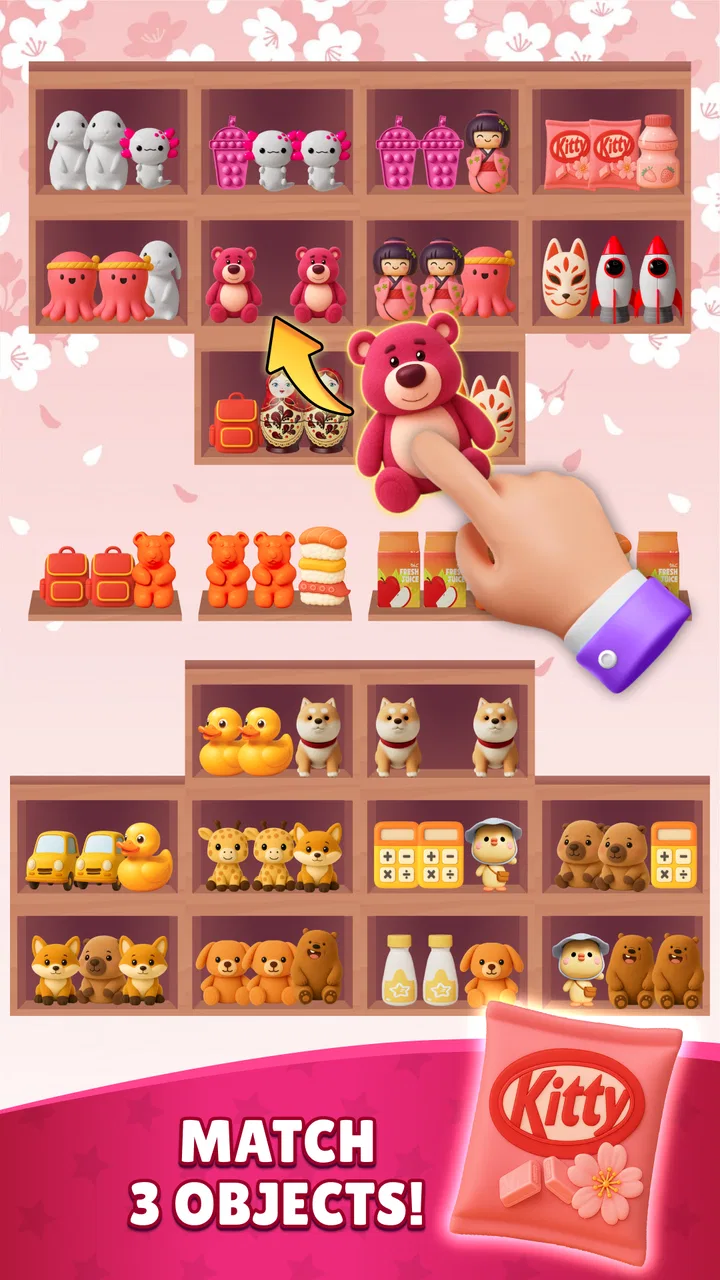
Royal Sort™ is a relaxing sorting and puzzle game centered on organizing colorful objects into the correct groups. After installing it, you complete levels by moving items between containers while following the game’s sorting rules. The early stages are designed as a gentle introduction, while later puzzles require more planning, careful use of available spaces, and sometimes a different approach after an unsuccessful move.
02Is Royal Sort™ free to download and play?
Royal Sort™ can generally be downloaded without an upfront purchase, allowing players to try the core gameplay before spending money. However, the free experience may include advertising, optional in-app purchases, or both. These purchases can be used for helpful items, extra moves, bonuses, or other convenience features, so it is worth checking the store listing and your device’s purchase settings before playing.
03Can I play Royal Sort™ without an internet connection?
Royal Sort™ may allow some previously loaded levels to be played offline, which is useful when traveling or when mobile data is unavailable. Nevertheless, features such as advertisements, cloud synchronization, event content, updates, or purchase verification may require an internet connection. Offline availability can also vary between versions, so test the game before relying on it without Wi-Fi or mobile data.
04Does Royal Sort™ contain ads or require in-app purchases?
The game may display advertisements, particularly between levels or when you choose to receive an optional reward. It can also offer in-app purchases for removing ads, obtaining hints, receiving additional lives, or progressing more quickly. You do not necessarily need to buy anything to start playing, but difficulty and ad frequency can vary. Parents should consider enabling purchase restrictions on shared devices.
05Is Royal Sort™ suitable for children and casual players?
Royal Sort™ is likely to appeal to casual players because its basic sorting mechanics are easy to understand and the short levels make it convenient for quick sessions. Even so, parents should review the age rating, advertising, privacy information, and purchase options before allowing children to play. Later puzzles may become challenging, while optional rewards and purchases could encourage longer play sessions.
Pros
- Relaxing sorting gameplay that is easy to learn and play casually.
- Short levels make it convenient for quick breaks or commutes.
- Colorful royal-themed visuals give the game a polished appearance.
- Gradual difficulty increase keeps the puzzles engaging over time.
- Simple controls make it accessible for players of different ages.
Cons
- Some levels may feel repetitive after extended play sessions.
- Progress can become slower as puzzles grow more challenging.
- Frequent ads may interrupt gameplay for free users.
- The game may require patience when solving difficult arrangements.
- Limited gameplay variety may reduce long-term replay value.

Royal Sort™
Gallery